
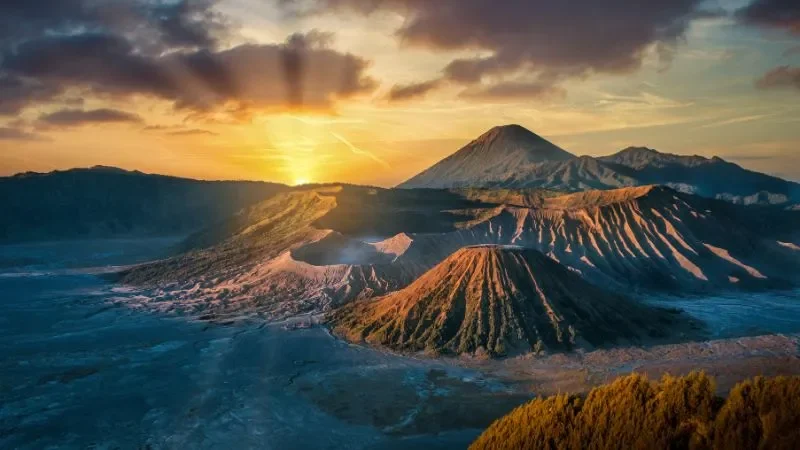
The Fascinating History and Origin of Mount Bromo
Mount Bromo’s history is a combination of ancient geological processes and local legends that are still believed by the Tengger people today. The mountain emerged after the collapse of Ancient Mount Tengger tens of thousands of years ago, while local tradition closely connects it with the story of Roro Anteng and Joko Seger, the ancestors of the Tengger people. This combination makes Bromo more than just a tourist destination. It is also a cultural site filled with meaning.
Understanding the stories behind this area can make your visit to Bromo more meaningful, rather than simply enjoying its natural scenery. Curious to learn more? Let’s explore the origin and stories behind this iconic mountain!
The History Behind the Name Mount Bromo
The name “Bromo” is believed to come from Brahma, one of the principal deities in Hinduism who is known as the creator god. The name is closely connected to the beliefs of the Tengger people, who practice Tengger Hinduism, a local belief system rooted in Majapahit traditions.
Several things are associated with the origin of this name:
- Mount Bromo is considered a sacred place because it is associated with Lord Brahma.
- Bromo Crater is often used by the Tengger people as a place for worship and offerings.
- The name “Brahma” gradually changed in pronunciation to “Bromo” over time.
The name derived from Brahma also reflects the Tengger people’s deep spiritual connection with the mountain they call home. To them, Bromo is more than a natural landscape. It represents the presence of the Creator in their daily lives.
The Legend of Roro Anteng and Joko Seger
The history of Mount Bromo cannot be separated from the legend of Roro Anteng and Joko Seger, who are regarded as the ancestors of the Tengger people. According to the legend, they had been married for a long time but had not yet had children. They then prayed to the gods for children, and their wish was granted on one condition: their youngest child would one day have to be sacrificed to Bromo Crater.
After having 25 children, the couple was reluctant to fulfill their promise. However, the mountain began to erupt as a warning. In the end, their youngest child, Kesuma, willingly threw himself into the crater to protect the Tengger community. Before disappearing, Kesuma asked his descendants to make annual offerings to the crater as a form of respect.
The Origin of the Kasada Ceremony
The legend of Roro Anteng and Kesuma gave rise to the Yadnya Kasada tradition, an annual ceremony that the Tengger people still preserve today. The ceremony takes place during the Kasada month, the 10th month in the Javanese-Tengger calendar, by throwing agricultural produce, livestock, and money into the crater as an expression of gratitude and respect for their ancestors.
This tradition usually attracts visitors because:
- It takes place right at the edge of Bromo Crater in the early morning.
- Hundreds of Tengger people from different parts of the region take part in the ceremony.
- It is one of the cultural attractions that adds to the experience of visiting Bromo, alongside enjoying the sunrise.
Mount Bromo’s Volcanic Activity
Beyond its legends, Bromo also has a long geological history as an active volcano. The mountain is part of the Tengger mountain complex, which was formed by major eruptions thousands of years ago and left behind a massive caldera that is now known as the Sea of Sand.
Throughout its history, Bromo has experienced several eruptions of varying intensity, ranging from minor ash eruptions to events that have disrupted flight activity around East Java. At the same time, this volcanic activity has helped shape Bromo’s iconic landscapes, including its savanna, Sea of Sand, and active crater, which continue to attract visitors today.
From the origin of its name, inspired by Lord Brahma, to the legend of Kesuma’s sacrifice that gave rise to the Tengger people, each story adds a distinctive layer to the culture of this area. The Yadnya Kasada tradition, which continues to this day, is clear evidence that this heritage is still being preserved. Combined with the traces of volcanic activity that shaped Bromo’s iconic landscape, these elements show how Mount Bromo history brings together mythology, culture, and geological phenomena.
Now that you know more about its history and origins, you are better prepared for an adventure to Mount Bromo. To accompany your journey, Landscape Bromo offers travel services to Bromo, including open trips, private trips, and other tour packages that can be tailored to your needs.
Contact Landscape Bromo today and choose the package that suits you best!
FAQ
- When Was Mount Bromo Formed?
Mount Bromo began forming after the collapse of Ancient Mount Tengger around 45,000 to 40,000 years ago. After the massive caldera was formed, ongoing magma activity created new volcanic cones inside it, including Bromo, which remains active today.
- What Does the Name Mount Bromo Mean?
The name Bromo comes from the Javanese spelling of “Brahma”, the creator god in Hinduism. The name reflects the Tengger people’s respect for the power of nature and their spiritual beliefs.
- Who Are the Indigenous People Around Mount Bromo?
The Tengger people are the indigenous community living around Mount Bromo. They are believed to be descendants of Roro Anteng and Joko Seger, with the name “Tengger” derived from the endings of the names of these two legendary figures.
- Is Mount Bromo Still Active?
Yes. Mount Bromo is an active volcano and continues to be monitored by the Center for Volcanology and Geological Hazard Mitigation. Its first recorded eruption dates back to 1775, with eruptive activity continuing into recent years.
- What Is the Main Tradition of the Tengger People Related to Mount Bromo History?
Yadnya Kasada is the main tradition directly connected to Mount Bromo history, particularly the legend of Dewi Kusuma’s sacrifice. The ritual is held every year as a form of respect for their ancestors and an expression of gratitude from the Tengger people.
